
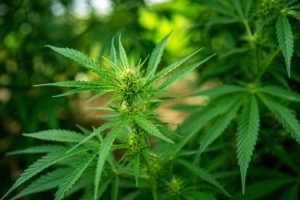
 The federal marijuana rescheduling hearing has closed after twelve days of testimony. The closing witnesses left behind a sobering record. Rather than building a case for marijuana as ordinary medicine, the cannabis rescheduling case exposed a different picture. Witnesses described uncontrolled products, unresolved psychosis risk and a persistent link to organised crime. A recommendation from the presiding judge is due in August. These final days of testimony carry real weight for how the cannabis rescheduling case will ultimately be decided.
Pharmacist Tells Cannabis Rescheduling Case That Safeguards Are Missing
California pharmacist Phil Drum opened the closing stretch of the hearing. He gave a professional’s view of what marijuana lacks. Marijuana carries a long list of adverse effects and drug interactions, he told the court. A pharmacist must catch and disclose these risks before handingover any medicine. State cannabis programmes rarely catch them, he said, and dispensary staff have no clinical training to fill that gap.
Drum also raised concerns about how the products reach consumers. THC edibles are often packaged to resemble familiar snack brands. That blurs the line between a controlled intoxicant and something a child would recognise from a supermarket shelf. He pointed to a human cost too. Veterans who avoid marijuana take their own lives at roughly half the rate of those who use it, he testified.
Recalls told a similar story. Notices for pulled marijuana products often reveal mould, bacteria and pesticides. These recalls also move far slower than an equivalent FDA action would.
Physician Warns of Psychosis and Youth Harm From Cannabis
Emergency physician Dr Karen Randall followed, drawing largely on patients she has treated herself. She dismissed several medical claims made for marijuana. The drug is useless or counterproductive, she said, for conditions such as seizures, Alzheimer’s disease, glaucoma, sleep apnoea and nausea.
Randall described marijuana as a hallucinogen with the power to derail a young life. Her list of consequences ran long: academic collapse, anxiety, depression, cannabinoid hyperemesis syndrome and cannabis use disorder. She also cited lasting changes to brain pathways, psychosis, schizophrenia and suicide. Treatment beds remain scarce, she said. Young people struggle to find care for cannabis addiction, particularly when psychosis or schizophrenia is also present.
She flagged a further blind spot. Marijuana does not appear in prescription drug monitoring programmes. A treating doctor, as a result, often cannot tell whether a patient is using it at all.
Yale Psychiatrist Links Marijuana to Psychosis Risk
Counsel for Idaho, Indiana and Nebraska opened their case with a point of history. It is one that has echoed through every marijuana rescheduling hearing to date. Marijuana has faced review for rescheduling nine times before. Each review reached the same conclusion: no currently accepted medical use and a high potential for abuse. To support that history, the states called Dr Deepak D’Souza, a Yale professor of psychiatry and a staff psychiatrist with the Department of Veterans Affairs.
D’Souza explained how THC overwhelms the brain’s cannabinoid receptors. The brain, he said, sheds receptors in response. He also explained why double blind, placebo controlled studies matter most, and why they rarely support the government’s benefit claims.
On the substance, D’Souza was direct. He called marijuana a cause of psychosis and schizophrenia, a link studied for two centuries. He placed its abuse potential above that of LSD or MDMA. Withdrawal, he testified, can be disturbing enough to force people back into use or into hospital care. Exposure during pregnancy is absolutely dangerous to the developing child, he added.
The pain research the government leans on rests on small samples and subjective outcomes. It strains credulity, he said, that a single drug would work across sixty separate conditions.
Sheriff Testifies That Legalisation Has Not Reduced Crime
The final witness was Sheriff William Honsal of Humboldt County, California. He described what has actually happened where marijuana is grown at scale. Honsal walked the hearing through the state’s long experiment with legalisation, from Proposition 215 through Proposition 64. Criminal activity, he said, has trailed the industry throughout: labour trafficking, drug trafficking, environmental crimes, robbery and assault. In several cases, he added, homicide too.
Honsal explained why the black market persists. Wholesale prices have collapsed under the weight of testing, taxation and compliance costs. Licensed growers, as a result, sit at a structural disadvantage against illegal operators who carry none of those burdens. Organised crime groups have used that gap as a foothold rather than a casualty of legalisation. Honsal named MS13, the Sinaloa Cartel, and Chinese and Bulgarian networks operating in his county.
Asked directly whether legalisation has reduced crime, Honsal answered simply that it has not. He pointed to his own jail as evidence. The share of inmates with prior mental health issues has climbed from around 20 percent to about 50 percent over the past twenty years.
What the Cannabis Rescheduling Case Means Going Forward
Taken together, the testimony from these final days complicates the picture the government set out to build. Pharmacology, clinical experience, psychiatric research and law enforcement all pointed towards the same conclusion. The safeguards that define genuine medicine are largely absent from the marijuana marketplace, and the social costs of legalisation have not eased with time.
A recommendation is due in August. Whichever way the decision falls, the record built during the cannabis rescheduling case will likely shape this debate for years to come. (Source: WRD News)
Cannabis Rescheduling Case Ends With Warnings on Psychosis, Crime and Youth Risk
- Details
- Hits: 113